
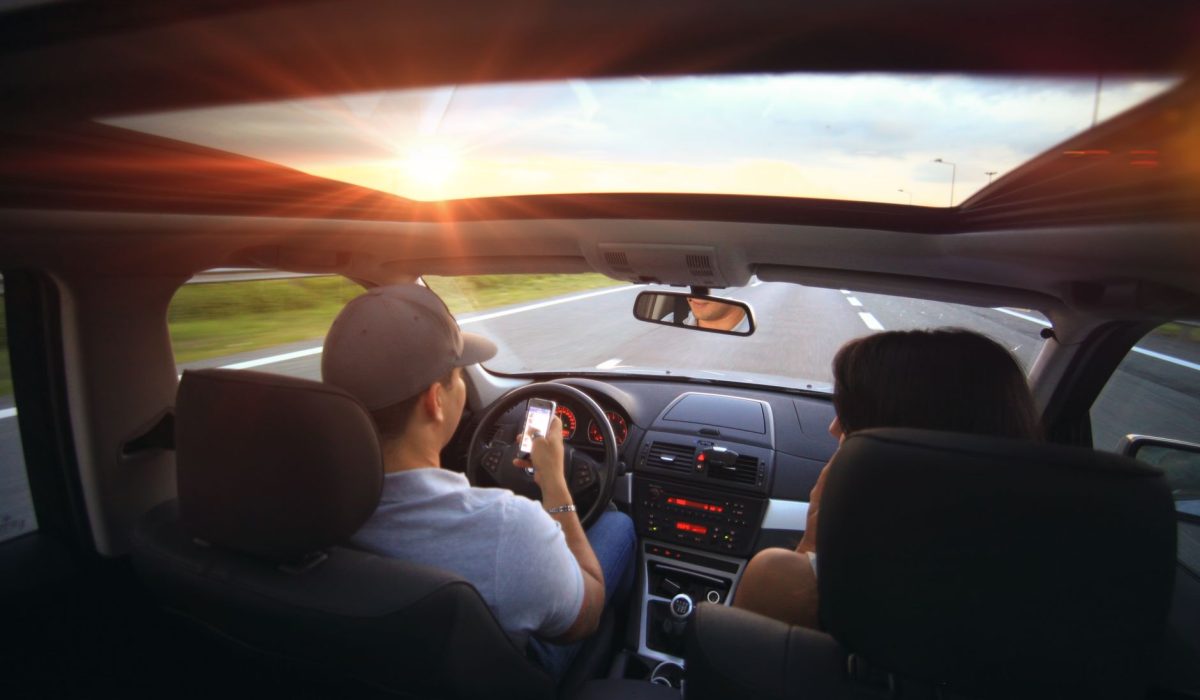
Drive-thrus make it easy to grab a meal on the go. Many drivers unwrap a burger or sip a coffee behind the wheel without a second thought.
That habit raises a fair question: could it get you pulled over? California has no law that names eating as an offense, but the risks are real.
Is Eating While Driving Against the Law in California?
Strictly speaking, no statute bans eating behind the wheel. The state's hands-free law, Vehicle Code Section 23123.5, deals with handheld phones and electronic devices, not food or drinks.
Still, drivers should not assume they are in the clear. If you want a deeper look at the question, this guide on whether it is illegal to eat and drive in California breaks down how the rules work in practice.
How Distracted Driving Is Defined
Distracted driving is one of the leading causes of traffic deaths and injuries nationwide. Federal safety data links thousands of fatalities and hundreds of thousands of injuries to distraction each year.
Officers and courts generally sort distractions into three groups.
Manual Distractions
These take your hands off the wheel. Reaching for a drink, opening a wrapper, or dipping a fry in sauce all count.
Visual Distractions
These pull your eyes away from the road. Looking down to find a napkin or check a spilled drink fits this category.
Cognitive Distractions
These take your mind off the task of driving, even if your hands and eyes stay in place. Focusing on a meal instead of traffic is a common example.
Eating can trigger all three at once. That combination is a big reason it draws attention from law enforcement.
When Eating Behind the Wheel Can Lead to a Citation
The deciding factor is behavior, not the food itself. An officer needs to see unsafe driving before making a stop.
Swerving, drifting between lanes, braking erratically, or struggling to control the vehicle while handling food can all give an officer grounds to pull you over. In those situations, a driver may be cited under broader traffic safety laws that address unsafe or careless driving. Fines and penalties vary depending on the violation and the circumstances.
Taking a sip of coffee at a red light is unlikely to draw attention. The problem starts when eating shows a real disregard for safe driving.
Why Eating and Driving Is Risky
Even careful drivers can be caught off guard. A dropped sandwich, a hot spill, or a reach across the seat can happen in a split second.
Any of those moments can lead to a sudden swerve, a hard brake, or a lost grip on the wheel. A second or two of lost control is often enough to cause a serious collision.
The danger does not stop with the driver. Passengers, pedestrians, cyclists, and other motorists all share the road and the risk.
What Happens When Distraction Causes a Crash
The impact of a distraction-related collision goes far beyond a traffic ticket. Both the at-fault driver and the injured people involved can face lasting consequences.
Consequences for the Driver
A driver who causes a crash may face fines, higher insurance premiums, and possible criminal penalties in serious cases. They may also risk losing driving privileges.
Civil liability is another concern. A distracted driver can be held financially responsible for injuries and property damage they cause.
Challenges for Injury Victims
Victims often deal with medical bills, time away from work, and a long recovery. Injuries can range from minor to catastrophic.
Proving that distraction played a role is rarely simple. It usually takes strong documentation, including police reports and evidence of what the driver was doing at the time of impact.
Common Questions About Eating and Driving
Is it illegal to eat and drive in California?
No single law makes it illegal. A driver can still be cited if eating leads to unsafe driving under the state's broader traffic safety rules.
What happens if eating causes a crash?
The driver may face fines, higher insurance costs, and civil liability for injuries or damages. The exact outcome depends on the facts of the collision.
Can an officer stop me just for eating in the car?
Generally, an officer must observe unsafe driving behavior first. Eating alone is not typically enough to justify a stop.
How a Car Accident Attorney Can Help
If you were hurt by a driver who was eating, texting, or otherwise distracted, you should not have to sort it out alone. Insurance companies often look for ways to reduce or deny claims, and proving fault takes solid evidence and a clear grasp of traffic law.
An experienced car accident lawyer can review police reports, identify witnesses, and analyze the accident scene. They can also handle communication with insurers, so you can focus on healing.
Strong legal representation can make a real difference in the outcome of a distracted driving claim. An attorney can work to hold every liable party accountable and pursue full compensation for medical bills, lost wages, and other damages.
Speaking with a knowledgeable attorney early helps protect your rights from the start. You can find an office near you to get started.