
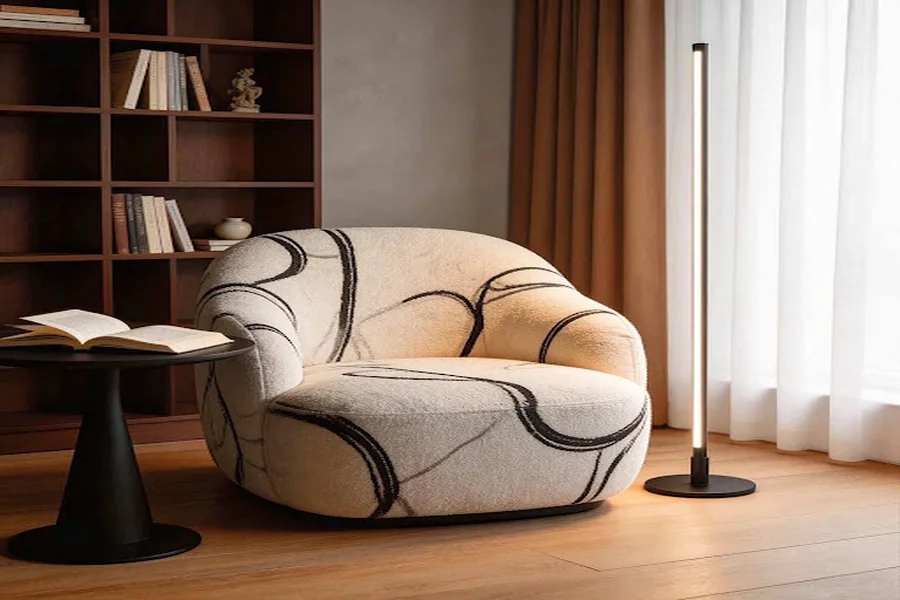
Many living rooms have one chair that looks perfectly fine but is almost never used. It may sit beside a bookcase, near the end of the sofa, or in a corner that seemed promising when the furniture was arranged. Yet every evening, everyone chooses another seat.
The problem is not always the chair. Sometimes the corner simply has no purpose after sunset. The ceiling light is too broad, the nearest table lamp is several feet away, and the space feels detached from the rest of the room. A well-placed floor lamp can change that without moving every piece of furniture.
Decide What the Corner Is For
Before choosing a lamp, decide what you would realistically do in that spot. Reading is an obvious answer, but it could also become a place for sketching, listening to music, gaming on a handheld console, watching a late episode without lighting the entire room, or having coffee before the rest of the house wakes up.
Be specific. “A relaxing corner” sounds appealing, but it does not tell you where the light should fall. “A place to read for twenty minutes before bed” immediately suggests focused light, a nearby surface for a drink, and controls that can be reached from the chair.
When browsing floor lamps, compare them according to that activity rather than style alone. A sculptural lamp may be ideal for adding atmosphere, while an adjustable design is usually more practical when you need light directed onto a book, craft project, or keyboard.
A focused light source gives an overlooked chair a clear reason to be part of the room.
Sit Down Before Choosing the Position
Floor lamps are often positioned while standing, which explains why glare becomes noticeable only after the room is finished. Sit in the chair at your normal angle and ask someone to hold a portable lamp nearby. If you are working alone, use a flashlight or clamp light to test several directions.
For reading, the light should reach the page without shining directly into your eyes. It normally works better when it comes from slightly behind or beside your shoulder. If the lamp is placed on the same side as the hand you write or draw with, your arm may cast a shadow across the page. Shift it to the opposite side and test again.
Also check the view from the other seats. A shade that hides the bulb from the reader may expose it to someone sitting across the room. Move around the space at seated eye level. This small test is far more useful than judging the lamp from the doorway.
For Screen Time, Light the Wall Instead
A completely dark room can make a television or monitor feel uncomfortably intense, but placing a bright lamp beside the screen may create reflections. The better approach is often to aim soft light toward a nearby wall, curtain, or ceiling. The reflected glow reduces the contrast between the screen and its surroundings without competing with the image.
Try the arrangement with an actual dark scene playing. Reflections that are invisible on a bright menu can suddenly appear during a night sequence. If you can see the lamp or shade reflected on the screen, move it farther to the side or lower its brightness.
For gaming rooms and anime-inspired spaces, colored light can add personality, but it does not need to flood the entire room. A gentle color behind a plant, shelf, or chair usually looks more considered than maximum saturation on every surface. Keep another warm or neutral source available for reading controls, finding a drink, or moving around safely.
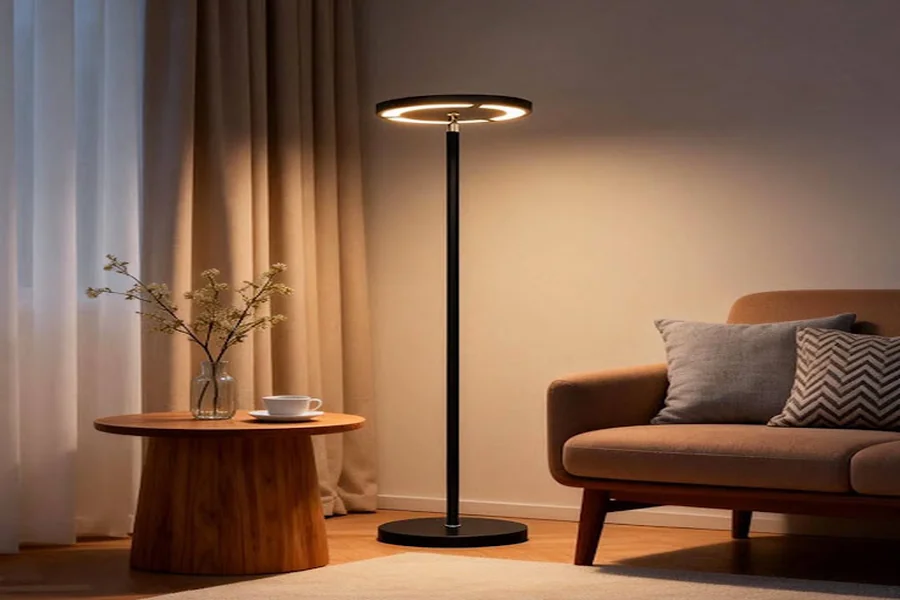
Indirect colored light can add atmosphere without producing distracting reflections on a nearby screen.
Match the Lamp Shape to the Available Space
A compact upright lamp can fit into a narrow gap between a chair and a wall. An arc lamp needs more room, but it can bring light over a sofa or table when there is no convenient place for a ceiling fixture. A torchiere sends light upward and is useful when the corner needs general brightness rather than a concentrated pool of light.
Measure the base as carefully as the height. Product photos naturally draw attention to the shade and stem, yet the base determines whether the lamp fits beside the furniture. Mark its footprint on the floor with painter’s tape. Make sure it does not block a drawer, curtain, air vent, or the route people use to walk through the room.
Arc lamps deserve an additional check. Sit down, stand up, and walk around the chair while imagining the full curve overhead. The lamp should create a sheltered feeling without hanging so low that people instinctively duck beneath it.
Do Not Ignore the Cord
The most attractive position may be useless if the cable has to cross a walkway. Locate the outlet before settling on the layout and avoid treating an extension cord as a permanent design solution. Cables should stay away from moving chair legs, heaters, and places where they can become a trip hazard.
Controls matter as well. A foot switch is convenient when the cord remains accessible, while a switch high on the stem may be easier to reach from a chair. Remote controls and smart functions can be useful, but the lamp should still be straightforward to operate when the remote inevitably disappears between the sofa cushions.
If the lamp is tall or top-heavy, check the stability of the base. This becomes especially important in homes with pets, young children, or robot vacuums that are remarkably determined to bump into everything.
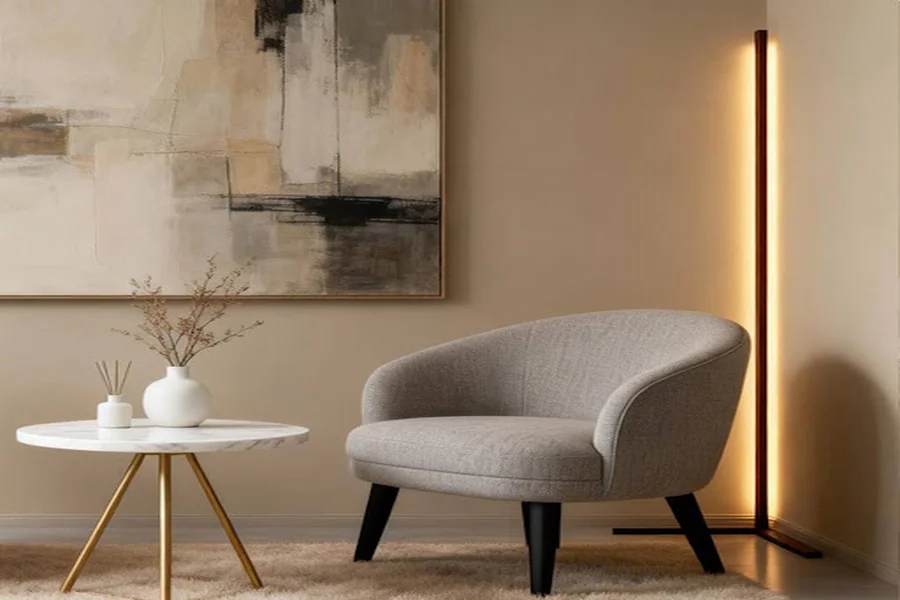
The lamp, chair, and surrounding space should work together as one usable area rather than separate decorations.
Let the Lamp Earn Its Place
Once the lamp is installed, use the corner for several ordinary evenings before rearranging anything else. Read there, watch something, or sit with a drink. Notice whether the switch is convenient, whether the light reaches the right spot, and whether the shade becomes distracting from elsewhere in the room.
You may only need to rotate the lamp, move the chair a few inches, or choose a softer brightness. When the setup is right, the change feels larger than the effort involved. The forgotten chair becomes a seat people choose voluntarily, and the awkward corner finally feels as though it was planned.