
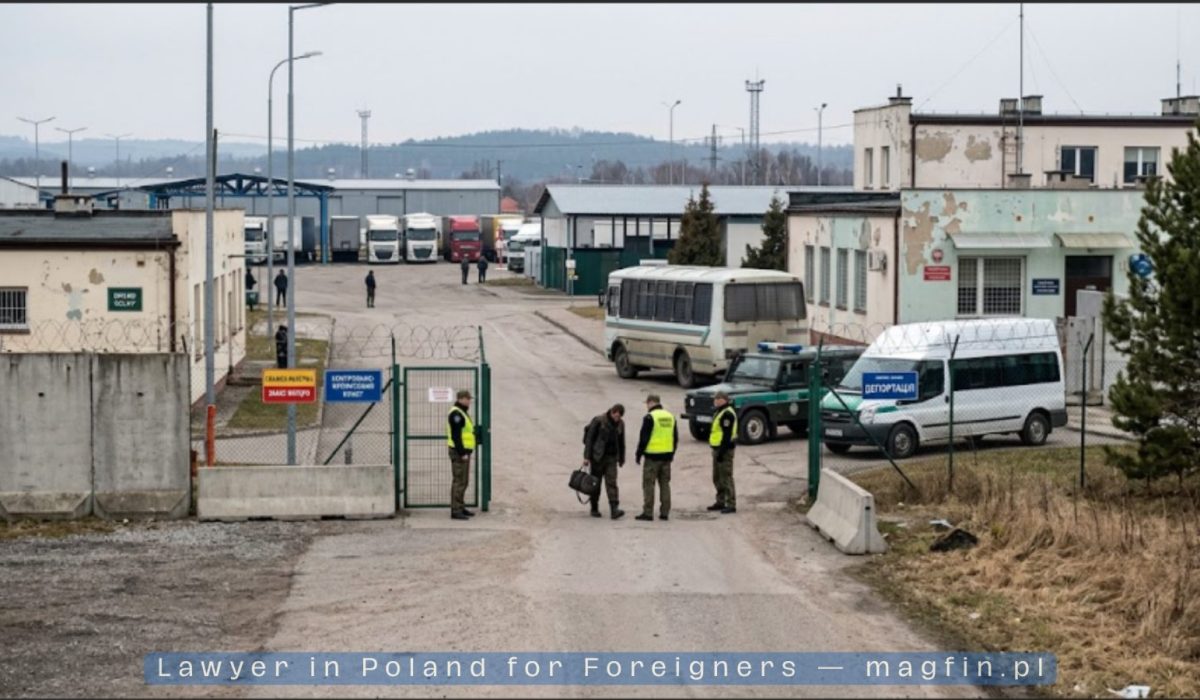
The procedure for forced return (zobowiązanie do powrotu), commonly referred to as deportation, is one of the most serious risks faced by foreigners in Poland. Deportation not only results in the cancellation of current documents but may also lead to the person's data being entered into the national register of undesirable persons and the SIS, together with a ban on entering the Schengen Area for a period of 6 months to 5 years.
Most foreigners believe that a deportation decision is only issued for serious violations of the law or illegal border crossing. In practice, the Border Guard (Straż Graniczna) and Voivodeship Offices (Urząd Wojewódzki) may initiate proceedings due to procedural errors, negligence when submitting documents, or a lack of knowledge of Polish immigration law.
Overstaying a visa or the permitted period of stay by even one day
The most common reason for initiating administrative proceedings is exceeding the permitted period of stay (overstay).
Under the visa-free regime, citizens of many countries are entitled to stay in the Schengen Area for no more than 90 days in any 180-day period. The number of days is calculated strictly based on passport stamps or electronic entry and exit records.
What is the problem?
- Foreigners often confuse “3 months” with “90 days” or fail to take the days of entry and exit into account (both are counted as full days).
- Remaining in the country after the expiry of a visa or the 90-day visa-free period, even for 24 hours, constitutes illegal stay (nielegalny pobyt).
If an overstay is detected, the Border Guard may issue a return decision, impose a fine and impose an entry ban ranging from 6 months to 2 years.
Unpaid fines, offences and criminal charges
Even minor offences committed in the Republic of Poland are recorded in government databases and may affect the legality of a foreigner's stay.
What may lead to deportation?
- In Poland, driving a vehicle while under the influence of alcohol (more than 0.5 per mille) constitutes a criminal offence. In addition to a driving ban and a fine, this may constitute grounds for revoking a residence permit and issuing a deportation decision on the basis that the person poses a threat to public order and security.
- Failure to pay fines for travelling without a valid ticket, traffic violations or violations of public order.
- Submitting falsified rental agreements (umowa najmu), insurance documents or proof of income when applying for a residence card may constitute an offence under Article 270 of the Polish Criminal Code and may result in deportation and a lengthy SIS entry ban.
Fictitious enrolment in post-secondary schools and universities
Applying for a residence permit on the basis of studies at a post-secondary school or university is a popular way of legalising one's stay. However, checks on actual attendance have become significantly stricter.
Educational institutions are required to report lists of students who have been removed from the register to Voivodeship Offices and the Border Guard. If a foreigner enrols in an educational institution solely to obtain a certificate and does not attend classes:
- the school informs the Voivode of the student's removal from the register;
- the Voivode cancels the Stamp / residence permit;
- the Border Guard initiates an investigation into the person's place of residence and issues an order to leave the country.
Leaving Poland independently after the expiry of the permitted stay without officially closing the case
It is a mistake to believe that, if there has been a violation or the permitted period of stay has expired, it is sufficient simply to leave Poland quietly and return to one's home country.
When crossing the border on departure (wyjazd z Polski), the Border Guard conducts a full passport and database check. If even one day of illegal stay is detected:
- a report is drawn up at the border;
- an entry ban may be imposed;
- the foreigner may receive a stamp in their passport and an entry in the SIS.
Attempting to cross the border “hoping that nobody will notice” may result in deportation proceedings being formally initiated directly at the border crossing.
How to Prevent Residence Permit Cancellation and Deportation: The Role of a Lawyer
Administrative proceedings in immigration cases are strictly regulated by the Polish Code of Administrative Procedure (KPA). Mistakes made when submitting documents or communicating with Border Guard officers can be extremely difficult to rectify after the fact.
Professional legal assistance in Poland (pomoc prawna w Polsce) can help mitigate risks before they escalate into court proceedings or formal deportation proceedings.
How can a specialised immigration lawyer (adwokat do spraw cudzoziemców) help?
- Audit of immigration history and documents: The lawyer analyses the foreigner's current status, calculates the days of stay, and checks whether employment contracts and notifications to the Voivode have been properly prepared.
- Assistance when changing employment or employment conditions: Preparation and timely submission of the required notifications (Oświadczenie o zmianie decyzji), helping to eliminate the risk of the employment being classified as illegal.
- Appealing decisions (Odwołanie): If a negative decision (decyzja odmowna) or a return decision is issued, a specialised lawyer files an appeal with the Chief Commander of the Border Guard (Główny Komendant Straży Granicznej) or, where applicable, brings proceedings before the Supreme Administrative Court (NSA).
- Suspension of enforcement of the decision: Filing a properly prepared appeal within the statutory deadline (usually 14 days) may suspend the enforcement of a deportation decision. This may allow the foreigner to remain lawfully in Poland while the case is being reviewed.
- Reduction or cancellation of an entry ban (Cofnięcie zakazu wjazdu): If a deportation decision has already become final, a lawyer may apply for the removal of the SIS entry ban where there are family, humanitarian or economic grounds.
Legal awareness and timely assistance from immigration specialists are the most reliable ways to protect one's status, retain employment and preserve the legal right to reside in Poland.