
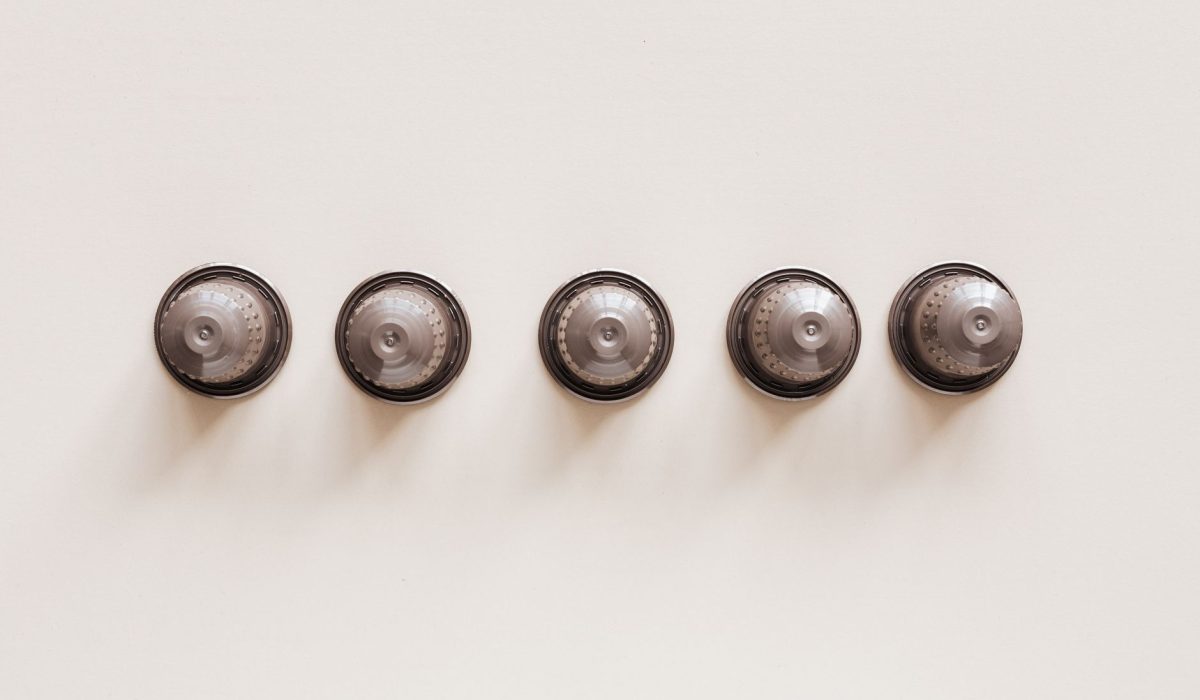
Single-serve coffee pods solved a real problem. They made good coffee fast, consistent, and nearly foolproof, which is a big part of why they took over so much of the at-home coffee market in the space of about two decades. They also created a new problem that took longer to become obvious: billions of small plastic containers, used for a few minutes each, that were never designed with disposal in mind. Plastic-free coffee pods have emerged as a direct response to that problem, and understanding what plastic-free actually means helps separate real alternatives from marketing language.
How Plastic Became the Default
When single-serve pod brewing took off, plastic was the obvious material choice. It was cheap, easy to mold into a consistent shape at massive scale, and able to hold a tight seal that kept coffee fresh until the pod was punctured for brewing. Manufacturers optimized for cost and function, not end-of-life disposal, and that decision shaped an entire industry before anyone was seriously asking what would happen to all those pods after use.
The scale is what makes the issue hard to ignore. Billions of plastic coffee pods are produced every year worldwide, and the vast majority are not recycled, even when a consumer tries to recycle them. That is not simply a matter of people not bothering to recycle. It comes down to how the pods are built.
Why Plastic Pods Are So Hard to Recycle
A standard plastic coffee pod is not made of a single, easily sorted material. It typically combines a plastic cup, a foil lid, a paper filter, and leftover coffee grounds, all fused in a way that most municipal recycling facilities are not equipped to separate. Even pods labeled as recyclable often require the consumer to manually pry apart the lid, empty the grounds, and rinse the cup before it can go in a recycling bin, a level of effort most people simply don't take on for a product designed around convenience in the first place.
The plastic itself is also frequently a type that has limited recycling infrastructure to begin with, which means that even a perfectly separated and cleaned plastic pod may not have anywhere to actually go once it reaches a sorting facility. The net result is that the overwhelming majority of plastic pods end up in landfills, where they can take hundreds of years to break down.
What Plastic Free Actually Means
Not every product marketed as an eco-friendly alternative is genuinely plastic-free, so the term is worth scrutinizing. Some brands have introduced compostable pods made from plant-based materials, which can work well but require access to industrial composting facilities that most households don't have, meaning the pod often ends up in a landfill anyway despite being technically compostable. Others have shifted to paper-based pods, though paper alone struggles to provide the oxygen and moisture barrier that keeps ground coffee fresh.
Aluminum has emerged as one of the more practical plastic-free alternatives, for reasons that go beyond simply swapping one material for another. Aluminum is infinitely recyclable, meaning it can be melted down and reformed repeatedly without any loss in quality, unlike plastic, which degrades each time it is recycled and can typically only be downcycled a limited number of times before it is no longer usable. A substantial majority of all the aluminum ever produced is still in use today somewhere in the world, a statistic that reflects just how effectively the material stays in circulation once it enters the recycling stream.
How Aluminum Pods Solve the Format Problem
Beyond recyclability, aluminum addresses a functional issue that some other plastic-free alternatives struggle with. Coffee needs protection from oxygen and light to stay fresh, and aluminum is one of the most effective barrier materials available for that purpose, which is part of why coffee bags have long used foil-lined packaging. Applying that same principle to a pod format means the coffee inside can stay fresher for longer than it would in a plastic pod, while also solving the end-of-life problem that plastic pods create.
Brewing performance is another factor that matters to anyone considering the switch. Aluminum coffee pods, including those made by Cambio Roasters, are built to work in standard Keurig-style brewers without any modification, so making the switch away from plastic doesn't require giving up the convenience that made pod brewing popular in the first place.
What to Check Before Switching
Anyone looking to move away from plastic pods should check a few specific things rather than trusting the phrase eco-friendly at face value. Confirm what the pod is actually made from, since paper and compostable claims often come with caveats around industrial composting access.
Check whether the material is accepted by local recycling programs, since aluminum is widely accepted in curbside recycling in most areas, while some compostable materials are not accepted anywhere outside of specialized facilities. It also helps to check whether the plastic-free coffee pod requires any extra steps, like separating a foil lid from a plastic base, since a product that claims to be recyclable but requires significant manual effort rarely gets recycled in practice.
The Bigger Shift
The move toward plastic-free coffee pods reflects a broader reckoning with single-use packaging across the food and beverage industry, not just coffee. As more consumers ask what happens to a product after the few minutes it takes to use it, manufacturers have more incentive to design packaging with an actual end-of-life plan rather than treating disposal as someone else's problem. Aluminum's combination of infinite recyclability and genuine freshness protection has positioned it as one of the more credible answers to a format that plastic dominated for years, largely because no one asked what would happen to it next.