Can You Wear Techwear Every Day? Dialling the Style Down Without Losing It
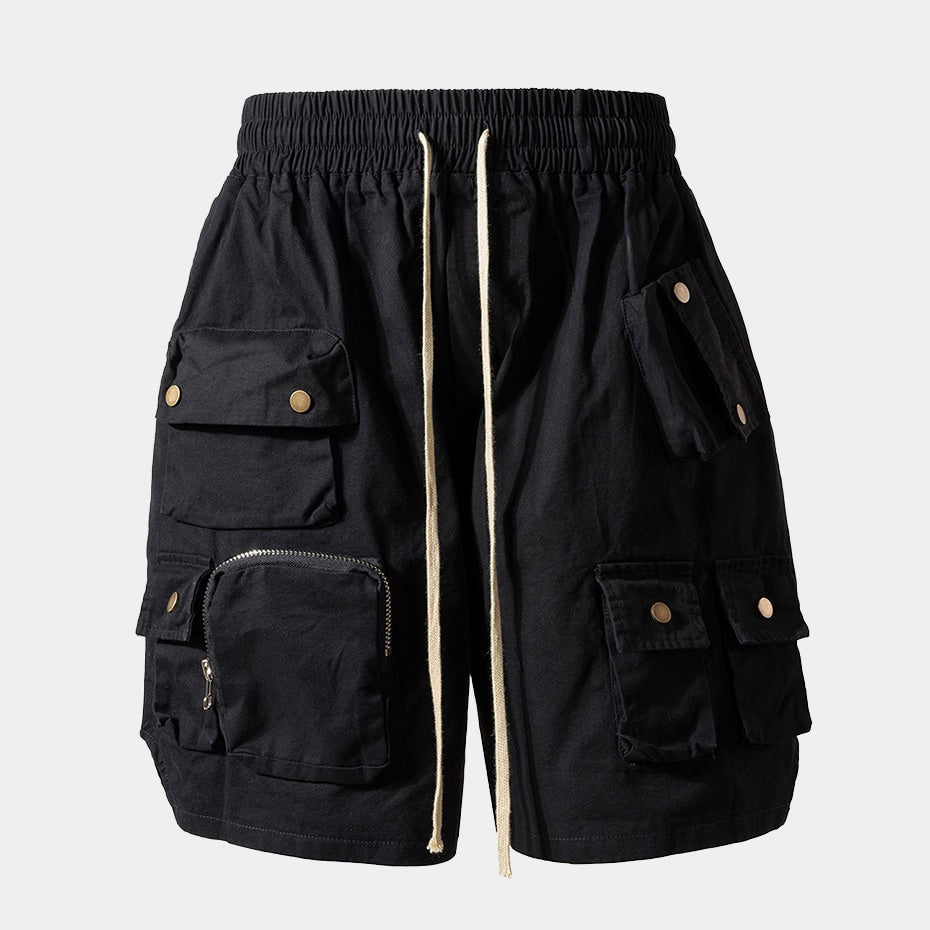
Quick summary: Full techwear reads as costume in most everyday settings — not because it's extreme, but because it's visually dense. The fix isn't abandoning the style, it's controlling the number of technical signals per outfit. One or two reads as considered. Five reads as a uniform for a film that doesn't exist.
The density problem
Techwear pieces are individually loud. Straps, exposed hardware, asymmetric closures, contrast panels — each element demands attention.
Wear five such pieces at once and the eye has nowhere to rest. That's what people are reacting to when they call an outfit "too much." It isn't the style being wrong; it's too many signals competing.
The professional version of this rule exists in every design discipline: one focal point, supporting elements that recede. Outfits obey the same logic.
The one-to-two signal rule
Count your technical elements. A cargo trouser is one. A chest bag is one. A shell with visible hardware is one. A harness is one.
For everyday wear, keep the count to one or two. Technical trousers with a plain black tee and clean sneakers is one signal — and it works everywhere. Add a chest bag and you're at two, still comfortably wearable.
Beyond that, you're dressing for an event rather than for a day.
Building the neutral base
Dialling down requires owning quiet pieces, which is where most techwear wardrobes are thin.
Plain technical tops. No graphics, no straps, good fabric. A well-cut black long sleeve does more work than any statement piece. Ranges like long sleeve shirts exist for exactly this role.
Clean footwear. Simple technical sneakers in a single colour. Complex footwear plus complex trousers is one signal too many at the bottom of the outfit.
An understated outer layer. Something that reads as a good jacket first and a techwear jacket second. This is the piece that lets the rest of the outfit be technical.
Context-specific adjustments
Office. Keep the technical element below the waist — trousers and footwear. Above the waist, stay plain. The silhouette reads as contemporary rather than costumed.
Dinner or social. One statement piece, everything else neutral. An interesting outer layer over a plain base is the reliable formula.
Travel. This is where the style genuinely outperforms. Pockets, packability, weather resistance and comfort all matter simultaneously. Travel is the one context where maximum technical density is also maximum practicality.
Warm weather. The hardest case, since layering carries the aesthetic. The answer is shifting the technical language to construction and cut — techwear shorts and lightweight technical tops keep the vocabulary without the heat.
The mistake to avoid
Don't dial down by buying cheaper or plainer versions of everything. That produces an outfit that's neither technical nor considered — just dark and slightly odd.
Dial down by reducing the count while raising the quality of what remains. One excellent technical trouser and one excellent plain top beats four mediocre statement pieces in every setting.
The transition wardrobe: five pieces
For anyone moving from full-volume weekend Cyber techwear's style has five pieces cover the bridge: one tapered technical trouser quiet enough for an office, two plain technical tops in black and one non-black neutral, one clean-lined shell, and one pair of single-colour technical sneakers. Every everyday configuration in this article assembles from that shortlist plus whatever statement pieces you already own.
The list is deliberately boring. Its job is to make the interesting pieces wearable more than twice a month — which, per cost-per-wear, makes the boring five the best value in the wardrobe.
Reading the room, literally
One final calibration skill: match your signal count to the setting's baseline. In a creative office where everyone dresses loudly, two signals read as quiet. In a conservative one, a single technical trouser is already the most interesting garment in the room. The outfit isn't worn in a vacuum — the same configuration lands differently against different backdrops, and the wearers who look effortless everywhere are the ones adjusting the count, not the wardrobe.
A one-week wearability experiment
Theory converts to habit fastest through a constrained trial: one week, everyday settings only, hard cap of two signals per outfit, and one photo per day in ordinary light. The photos matter — mirrors flatter and memory edits, but a week of quick snapshots shows precisely which configurations read as considered and which read as costume against real backdrops.
Most people finish the week with two findings: their most-worn pieces weren't their favourites in the wardrobe, and their favourite outfit contained fewer elements than anything they'd have assembled deliberately. Both findings are the point. Daily techwear is a subtraction skill, and a week of evidence teaches it faster than a year of intention.
One reassurance for anyone who feels the dialled-down version betrays the style: restraint is period-correct. The original technical-clothing culture prized the grey-man ideal — full capability, zero announcement — long before the photogenic maximalist version colonised the image feeds. Wearing one perfect technical trouser to an office isn't a compromise of the aesthetic; it's arguably its purest expression.
Total cost of the experiment: zero purchases, seven photographs, and one honest look at the results. Few style upgrades are cheaper.
Wardrobes, like rooms, are read at a glance and lived in for years — dress for the second audience, and the first one takes care of itself.
Conclusion
Techwear is entirely wearable daily. The people who conclude otherwise have usually tried to wear all of it at once, decided the style doesn't work in real life, and moved on.
The adjustment is small and immediate: count the technical signals, keep it to one or two, and invest the difference in a strong neutral base. Do that and the style stops being an occasion outfit and becomes what it was designed to be — clothing that performs better than what most people wear, and happens to look distinctive while doing it.