Can You Search a Discipline You’ve Never Heard Of?
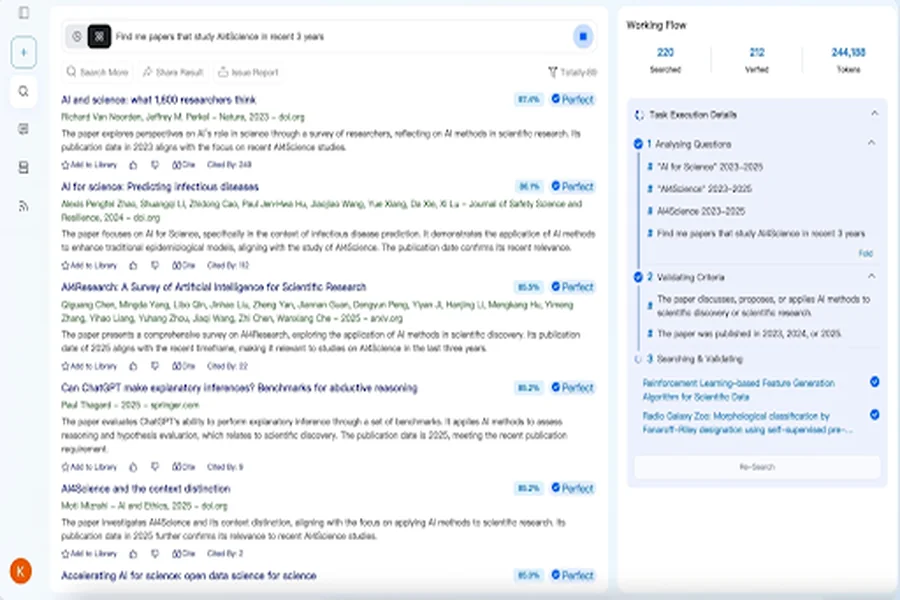
The short answer is yes, and the reason has little to do with knowing the field in advance. WisPaper, an AI academic agent, treats search as a problem of intent and structure rather than vocabulary. That distinction is what makes an unfamiliar literature searchable at all.
Every researcher hits some version of this. A reviewer asks you to engage with a subfield whose name you have to Google twice, and WisPaper is the thing that gets you oriented without pretending you already speak the language.
The Reviewer’s Suggestion You Had to Google
The comment arrives as one sentence buried in a review: “The authors should engage with the literature on preference adaptation under asymmetric information.” You read it twice. You Google it, and the first page of results is all jargon, paywalled survey papers, and conference abbreviations you can’t decode. None of it tells you what the field is actually about or whether it’s even the right thing to cite.
Same Idea, Three Different Jargons
Here’s the part that stings. You start reading and realize the method you already use has a completely different name in this field than in the ones you know. In behavioral economics it’s called one thing; in operations research, the same move goes by another label entirely. Two papers can describe an identical mechanism and share no keywords at all. Searching by the words you know, you’d never find the second paper.
Searching by Shape, Not by Vocabulary
That’s where vocabulary gives way to structure. WisPaper’s Deep Search verifies the intent behind a query instead of matching the exact phrase, so you can describe the idea rather than name it, and it works through deconstructing the problem, checking the conditions you’ve set, and confirming what comes back. Complex include and exclude logic gets handled instead of shrugged off. This is the part of the AI academic agent that does the heavy lifting when the field has its own gatekeeping terms.
Mapping a Field You Just Met
Once you’ve found the first real papers, the next problem is orientation. Idea Discovery scans the indexed documents and points out where the gaps and entry points sit, so a field you met this week starts to look like a map instead of a heap of citations. You can see which subthreads are growing and which names keep showing up.
Stealing Methods Across the Hallway
The payoff is not that you cite the paper and move on. It’s that you can ask questions against the material you’ve gathered, with Scholar QA pulling answers from your own collected sources and showing where each claim connects back. You walk out with the method, some of the vocabulary, and a citation you can actually defend.