Reusing an Agent Across Departments: Four Conditions
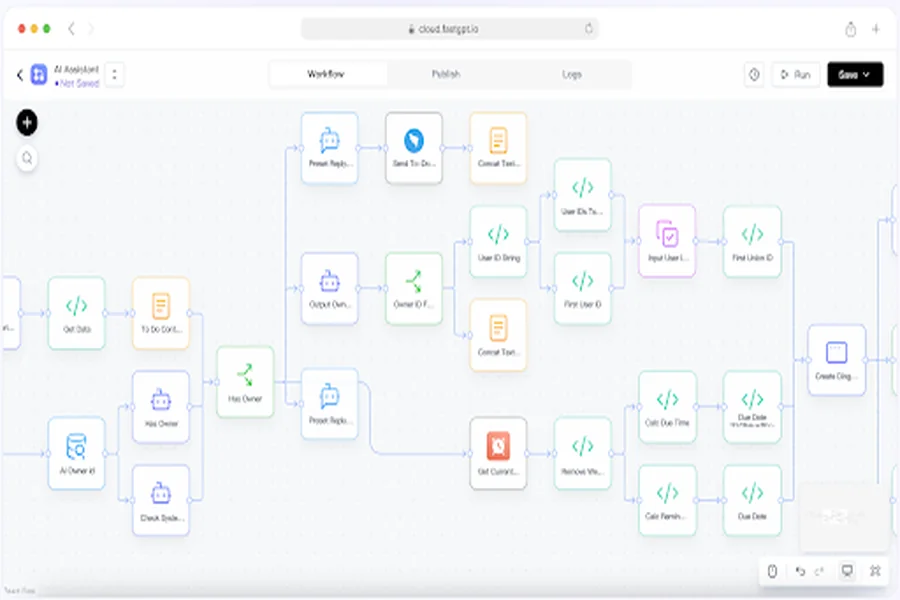
The second department that wants the same assistant is where reuse pays and where it also binds two teams together. Four conditions decide whether to reuse a build or make a copy.
The reusable assets are workflow logic, plugins and tools, knowledge base structure, variable naming rules, publication channel configuration and rollback paths. What must be rebuilt is departmental content, interface endpoints, business fields and visibility scope.
Four conditions
The first is whether the business question is structurally the same. Policy questions across departments are; ticket handling and contract review are not. Reusing an orchestration across non-equivalent questions produces a canvas full of branches, each serving one department.
The second is whether the data source is the same. Identical sources give the largest saving: interfaces, fields and refresh rhythm all match, and only the query scope differs. Similar structure with different sources still allows reuse, with interface adapters rebuilt.
The third is whether permission boundaries align. With file permissions and current-member authentication enabled, retrieval filters the readable collections, so two departments inside one knowledge base effectively apply two isolations to one corpus. Separate knowledge bases are usually cheaper to reason about.
The fourth is whether change cadence is close. Similar cadence means one upgrade benefits both; distant cadence means one team is always waiting for the other.
Build the second one first
Reuse is not designed in the abstract. Run the second scenario end to end, then compare the two orchestrations. Repeated nodes, prompts and variables become the shared asset; anything appearing once stays where it is.
Freshly extracted shared components should be validated by switching the first scenario over to them, and only then reused for the third. If the first scenario breaks, the extract came too early.
Governance is the price of reuse
Reuse introduces three owners that did not exist before: who maintains a shared plugin, who keeps a shared knowledge base current, and who is notified when a shared variable is renamed. Without those names, reuse converts duplicated work into coordinated waiting.
The artifact is short: an asset list with owner, update frequency and affected scope. One page, reviewed quarterly.
When to build separately
Three situations justify a separate build: the question is not structurally equivalent, the data source needs a new interface with a long lead time, and the permission boundary requires full isolation. In all three, build one working scenario first and assess reuse afterwards.
Tool calls and workflow structure are documented per release, and the current node-level behaviour is described in the 4.17.3 release notes .
The general rule for multi-department rollout: settle the model pool and channel per department before copying the flow, not afterwards.
Measure reuse by the second rollout, not the first
The value of reuse appears in the second department’s timeline, not in the first build. Record how long the second rollout takes, which assets were reused without change, and which were rebuilt.
That record becomes the estimate for the third rollout, and it is the only evidence that a shared component earns its maintenance cost.
If the second rollout takes as long as the first, the shared components were extracted too early. Naming that outcome honestly is cheaper than maintaining an abstraction nobody uses.
Hand over with the asset list, not the flow alone
A departmental handover is usually a walkthrough of the flow. That covers the happy path and leaves the maintenance work undocumented.
Add the asset list: shared plugins and their owners, shared knowledge bases and their update rhythm, shared variables and their naming rules. Three lines per asset, and the receiving team can judge what it is inheriting.
Handovers that include the asset list need fewer follow-up questions in the first month, which is also when the receiving team’s patience is highest.
Decide what stays central
Two models exist for multi-department rollout. Central maintenance keeps one flow and one owner; federated maintenance lets each department adapt its own copy.
Central suits stable processes with a small number of departments; federated suits processes that diverge quickly. Choosing deliberately is better than drifting into one, which is what happens when no one names the model.
Whichever is chosen, publish the decision with the asset list so that the next department knows whom to ask.